


ROLE
Product conceptUX/UI designInteraction designPrototypingSELF-INITIATED CONCEPT · PRODUCT DESIGN
8Qs
A lighter way to decide.
A decision-making concept that uses eight short questions to help people weigh their options and reach a reasoned recommendation.
YEAR
2026It’s rarely just one thing.
A difficult choice can turn into a loop of comparing options, imagining consequences and worrying about regret. I started with a question: could the process feel inviting enough to begin, rather than like more work?
I wanted to create a sense of relief: someone helping you reach a direction, without hiding the reasoning or taking the decision out of your hands.

One question at a time.
8Qs explores motivations, priorities, concerns and practical limits through a short exchange. Earlier answers shape what comes next, while multiple selections allow competing reasons to coexist.
The result offers a direction, explains the main considerations and suggests a practical next step. People can add context if something important has been missed.
Why eight?
I chose eight questions to make the commitment visible from the start. It is a design constraint to test, rather than a proven ideal. The challenge is to keep the exchange short without asking questions that feel generic or skipping something essential.
From research to a design choice.
The Ottawa Personal Decision Guide encourages people to consider what matters to them when weighing options. This informed a distinction in 8Qs: identifying a possible benefit is not the same as knowing how important it is to the person.
The questions therefore explore priorities as well as reasons for and against a choice.
Decision-support references
These informed the design. They do not establish the effectiveness of 8Qs.
- Ottawa Personal Decision Guide
- PrOACT, from Smart Choices by Hammond, Keeney and Raiffa
- WRAP, Chip and Dan Heath
Guided walkthrough
Should I move to a new city?
The example follows someone considering a move to a new city. Her partner’s shorter commute is part of the decision, but the conversation also needs to uncover what the move would mean for her.
1 of 6
Start with the dilemma.
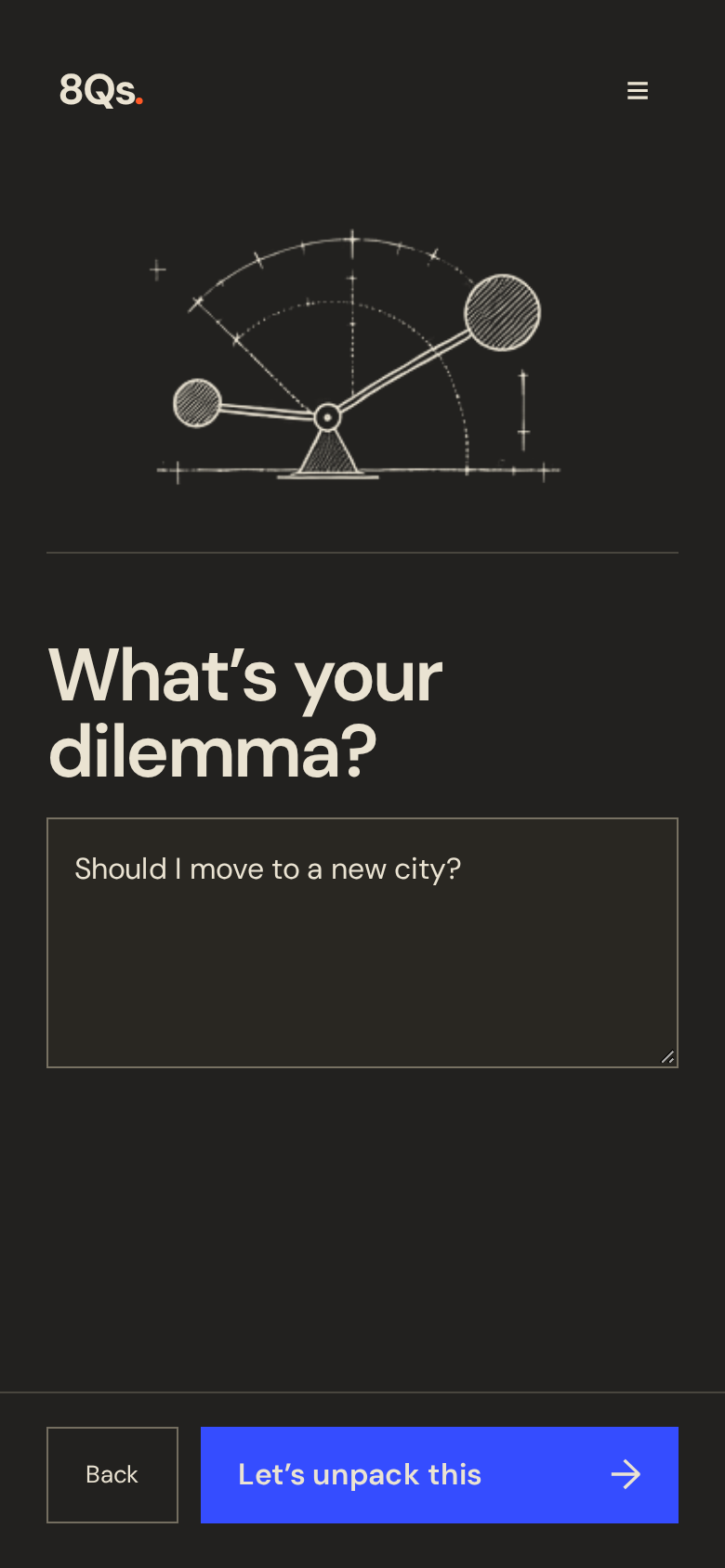
A concrete question gives the exchange a starting point.
- 01 / 06
Start with the dilemma.
A concrete question gives the exchange a starting point.
- 02 / 06
Understand the motivation.
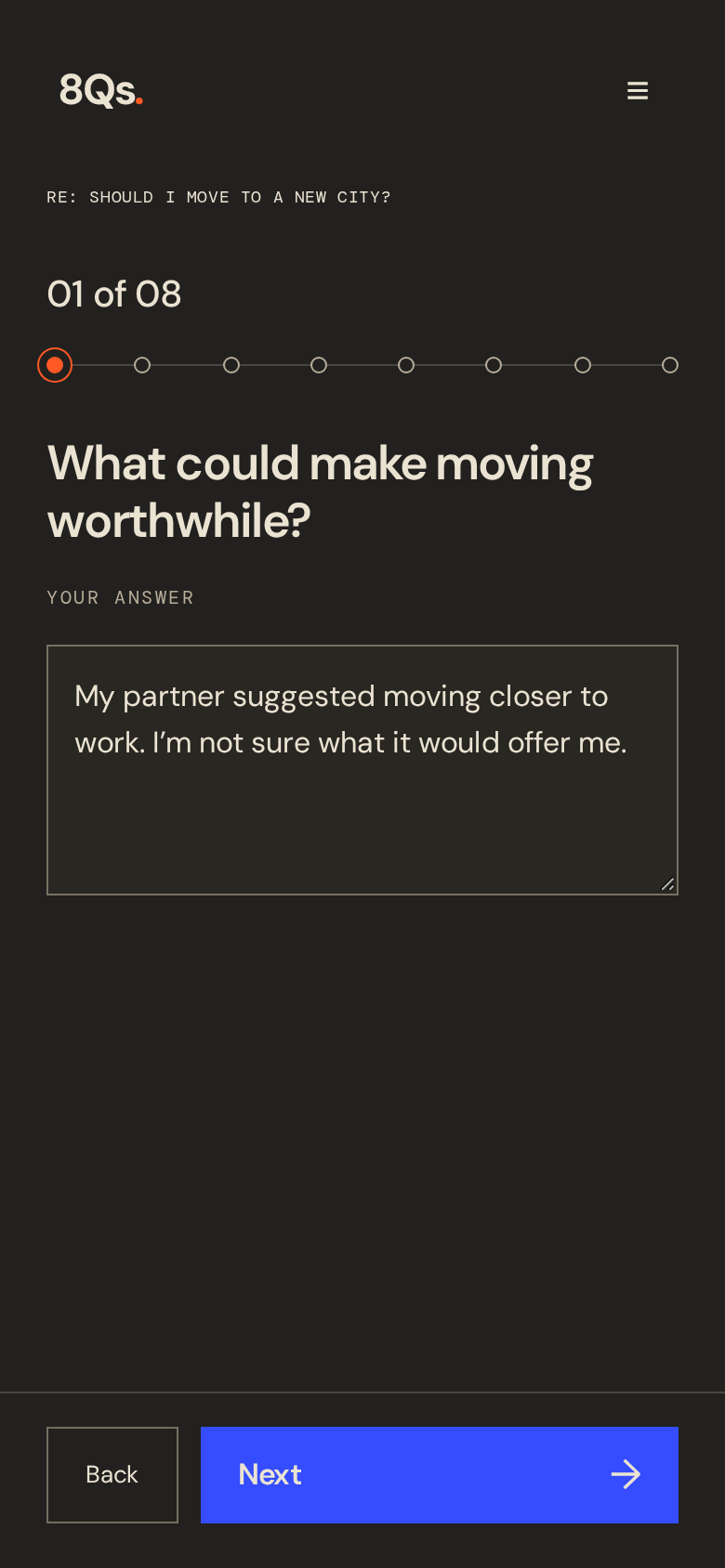
Her partner’s commute introduces the move. The next step is to explore her own reasons.
- 03 / 06
Allow several factors.
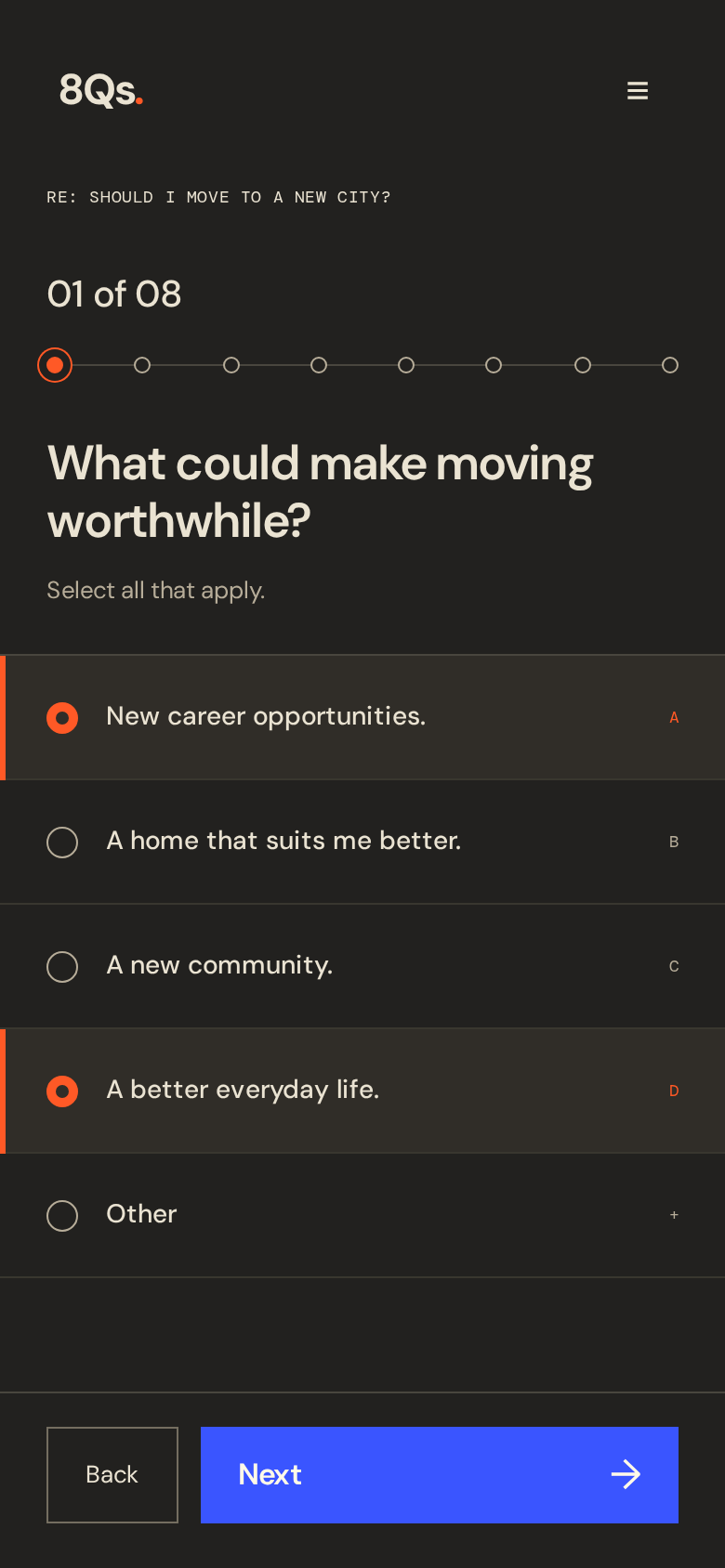
New career opportunities and a better everyday life can matter alongside her partner’s reason.
- 04 / 06
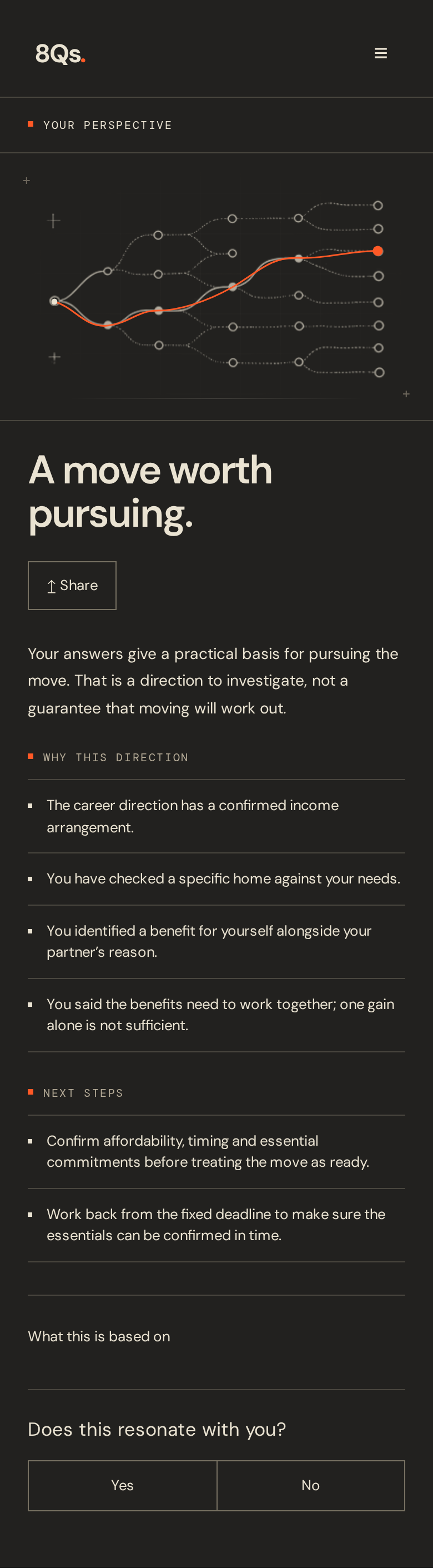
Offer a direction.
After eight questions, a confirmed role, a checked home and covered costs support pursuing the move.
- 05 / 06
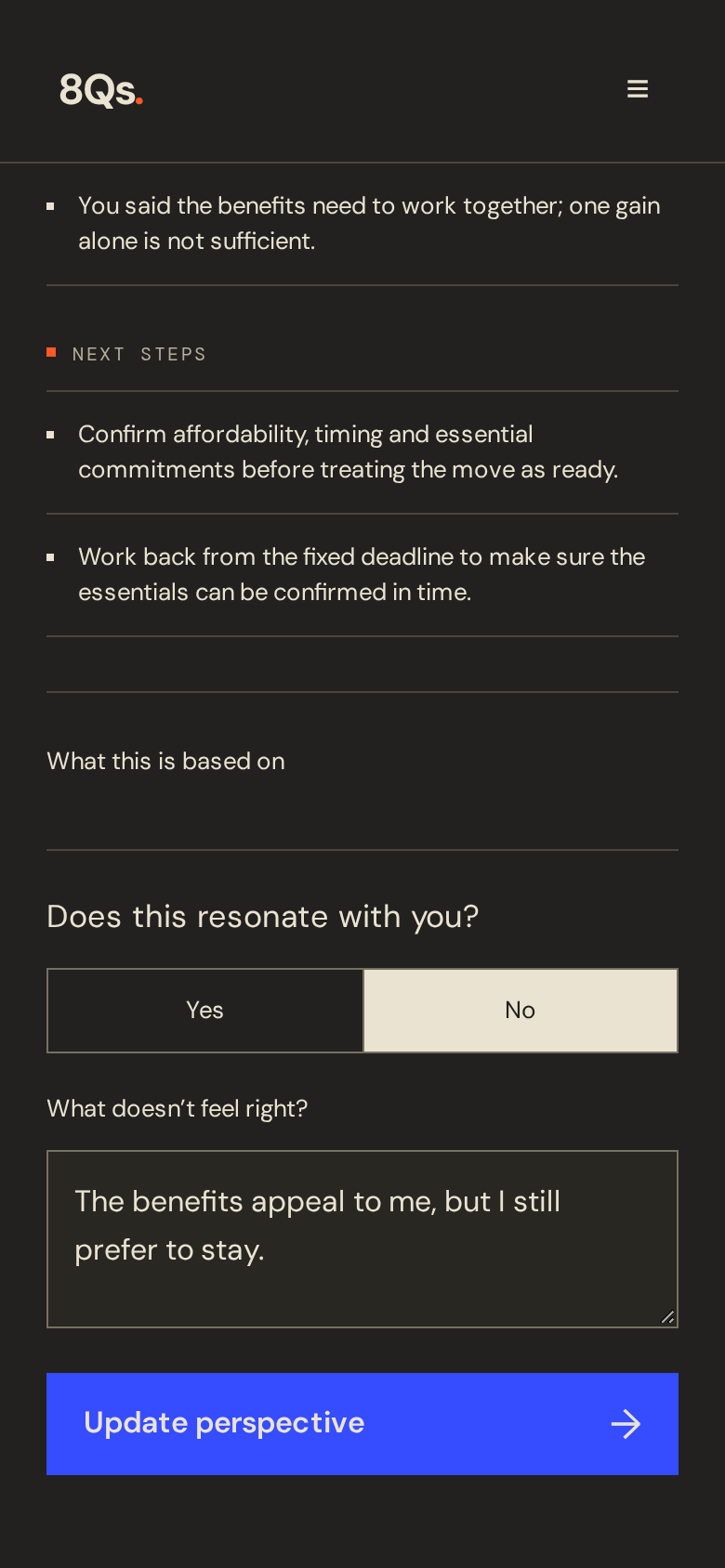
Say what doesn’t fit.
The benefits appeal to her, but she still prefers to stay. She says so in her own words.
- 06 / 06
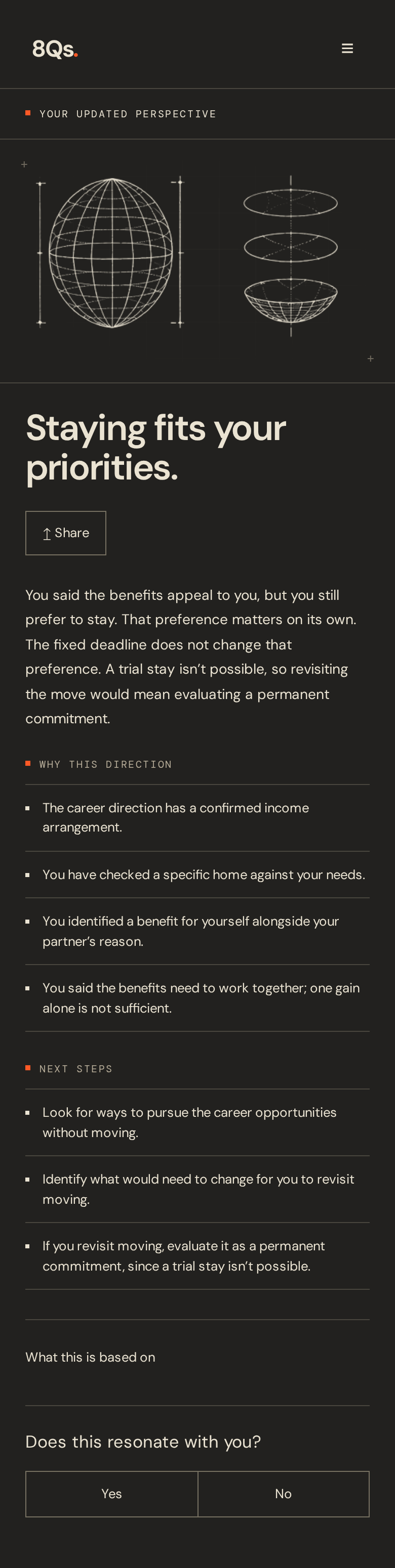
Reconsider with context.
She then adds that a trial stay isn’t possible. The perspective keeps both: staying fits her priorities, and revisiting the move would mean a permanent commitment.
A different result was not enough.
The early prototype could change its recommendation after feedback, but most questions stayed the same. The ending responded; the conversation did not.
I revised the demo so earlier answers shape what the conversation explores next. Questions build on the context already shared rather than following a fixed sequence.
For example, someone considering a move for career reasons is asked whether the opportunity is confirmed or still uncertain.
The recommendation also needs to retain unresolved constraints, even when the person prefers to proceed.
Earlier approach · previous prototype
The same follow-up, whatever the answer.
What could make moving worthwhile?
New career opportunities.
If his commute wasn’t a factor, how would you feel about moving?
Revised approach
The follow-up responds to the selected answer.
What could make moving worthwhile?
New career opportunities.
What is the career opportunity based on?
Character at the start. Space to think.
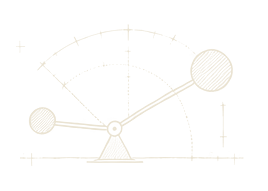
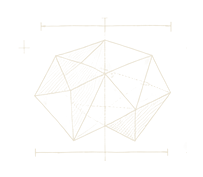
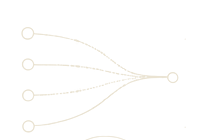
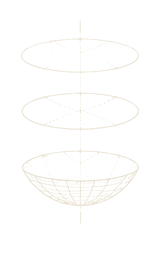
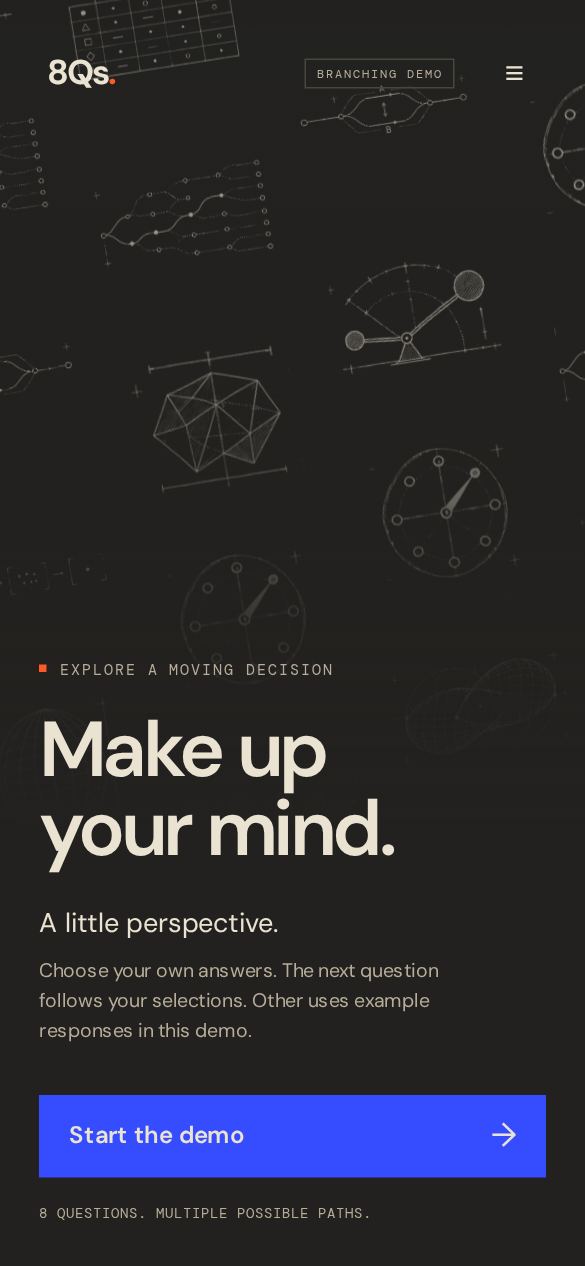
The animated introduction creates curiosity through textured diagrams of balances, selectors and branching paths. The imagery connects the visual identity to weighing and choosing.
The question screens use a restrained layout, strong contrast and a consistent blue action. Keeping the visual structure stable allows the content to change without making each step feel unfamiliar.
A visible endpoint.
The counter and eight-point line make the length of the exchange explicit. Each completed question advances the progress indicator.
More than one reason.
Relevant questions allow multiple selections. A person can want new opportunities and worry about losing their community without being forced to reduce the decision to one factor.

Feedback with a purpose.
Selection states acknowledge an answer immediately. Transitions mark progress, while the quieter reading states keep attention on the question.
Try 8Qs.
Explore a moving decision and see how your choices shape the questions.
The current demo uses prepared rules within one scenario. “Other” offers example responses rather than processing personal free text.
Opens full screen. Close returns you here.
What I would test next.
The prototype shows how the interaction could work. Testing with people facing real dilemmas would establish whether it feels relevant and manageable.
- Does the process feel manageable?
- Observe completion, hesitation and perceived effort.
- Is eight the right length?
- Look at where people leave, which questions feel repetitive or unnecessary, and whether those who finish still feel something important was missed.
- Do the questions feel connected?
- Check whether participants recognise how their answers shape the exchange, and what feels irrelevant or missing.
- Is the recommendation useful?
- Check whether participants understand its reasoning, recognise unresolved conditions and can identify a next action.
To examine the role of the expressive visual treatment, I would compare the same question flow with and without the motion and feedback layer. Agreement with a recommendation alone would not demonstrate that the decision was better.
Keeping it short takes more judgment.
Working on 8Qs shifted my attention from the recommendation to the conversation that earns it.
A short flow needs to be selective, but it also needs to carry context forward. The next iteration would test which questions add useful information, which can be removed and when a dilemma needs more exploration than eight questions can offer.
The aim is a process that feels lighter while still taking the decision seriously.